Tharun Selvam Mahendran
PhD Researcher · Biophysics & Bioengineering

Tharun Selvam Mahendran

State University of New York at Buffalo

My research asks how biomolecular condensates — liquid-like compartments that concentrate RNA and protein inside cells — tip from functional to pathological. Using optical tweezers, microfluidics, and bottom-up reconstitution, I showed that condensate microenvironments can enhance RNA percolation and aggregation, and that homotypic RNA clustering drives a liquid-to-solid transition at condensate cores. A parallel line of work demonstrates that decoupling phase separation from fibrillization preserves condensate biochemical activity — a strategy with direct therapeutic implications for ALS, FTD, and related neurodegenerative diseases.

152+
Citations
7
Publications
9
Awards
Nature Communications · 2026
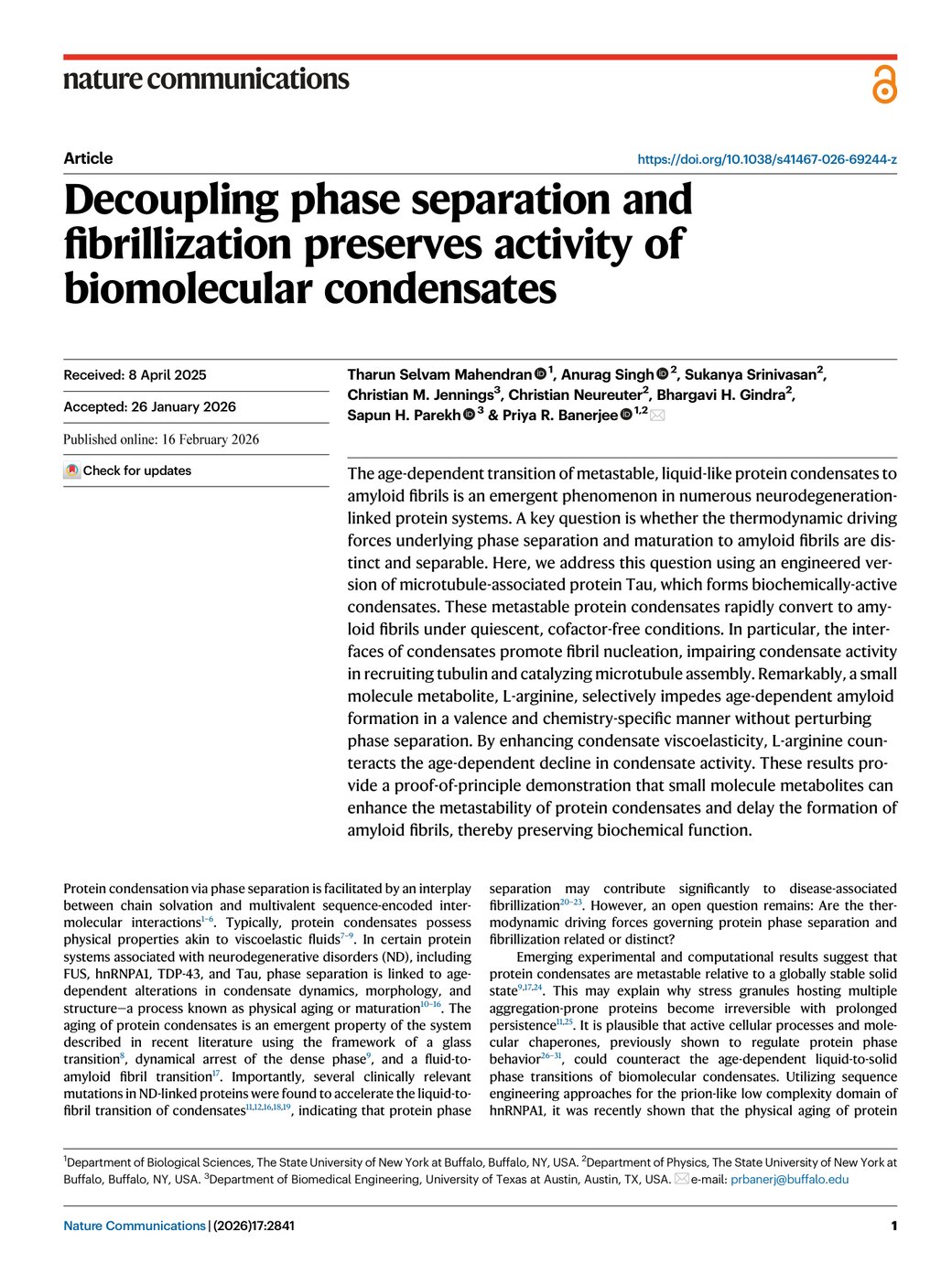
Decoupling Phase Separation and Fibrillization Preserves Activity of Biomolecular Condensates
Mahendran, T.S., Singh, A., Srinivasan, S., …, Parekh, S.H., Banerjee, P.R.
We demonstrate that the conversion of protein condensates into amyloid fibrils is not an inevitable consequence of phase separation. By identifying small molecules that selectively inhibit fibrillization without disrupting condensate formation, we show that decoupling these two processes preserves the biochemical activity of the condensate — with direct implications for therapeutic targeting of condensate-driven neurodegeneration.
Nature Chemistry · 2025 · Media: EurekAlert, Phys.org
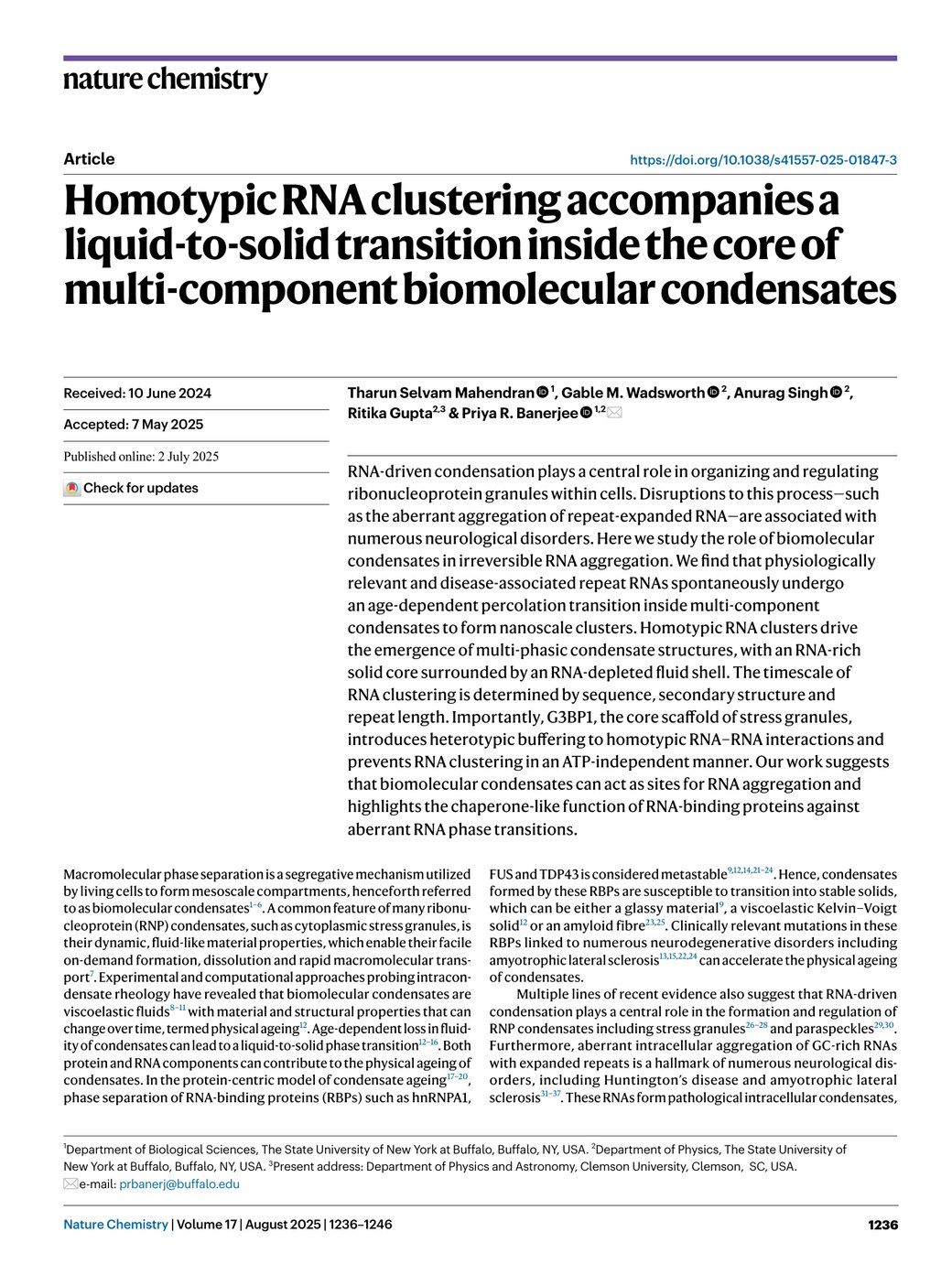
Homotypic RNA Clustering Accompanies a Liquid-to-Solid Transition Inside the Core of Multi-Component Biomolecular Condensates
Mahendran, T.S., Wadsworth, G., Singh, A.S., Gupta, R., Banerjee, P.R.
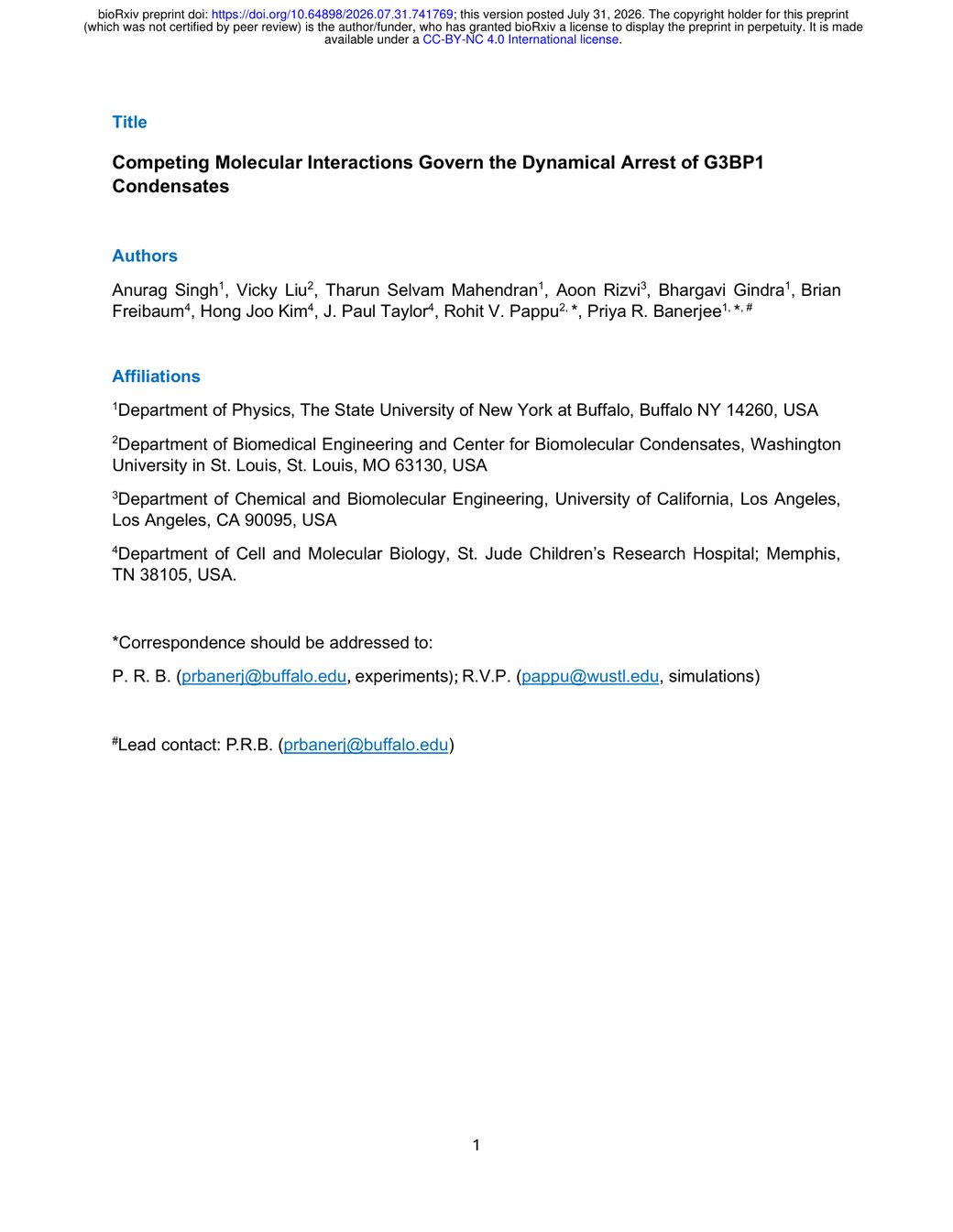
Using single-droplet biophysical methods, we reveal that repeat-expanded RNAs undergo homotypic clustering within condensate interiors, driving a liquid-to-solid phase transition at the core. This percolation transition is mechanistically distinct from bulk gelation and represents a critical checkpoint in the pathway from functional condensate to pathological aggregate.
bioRxiv Preprint · 2025
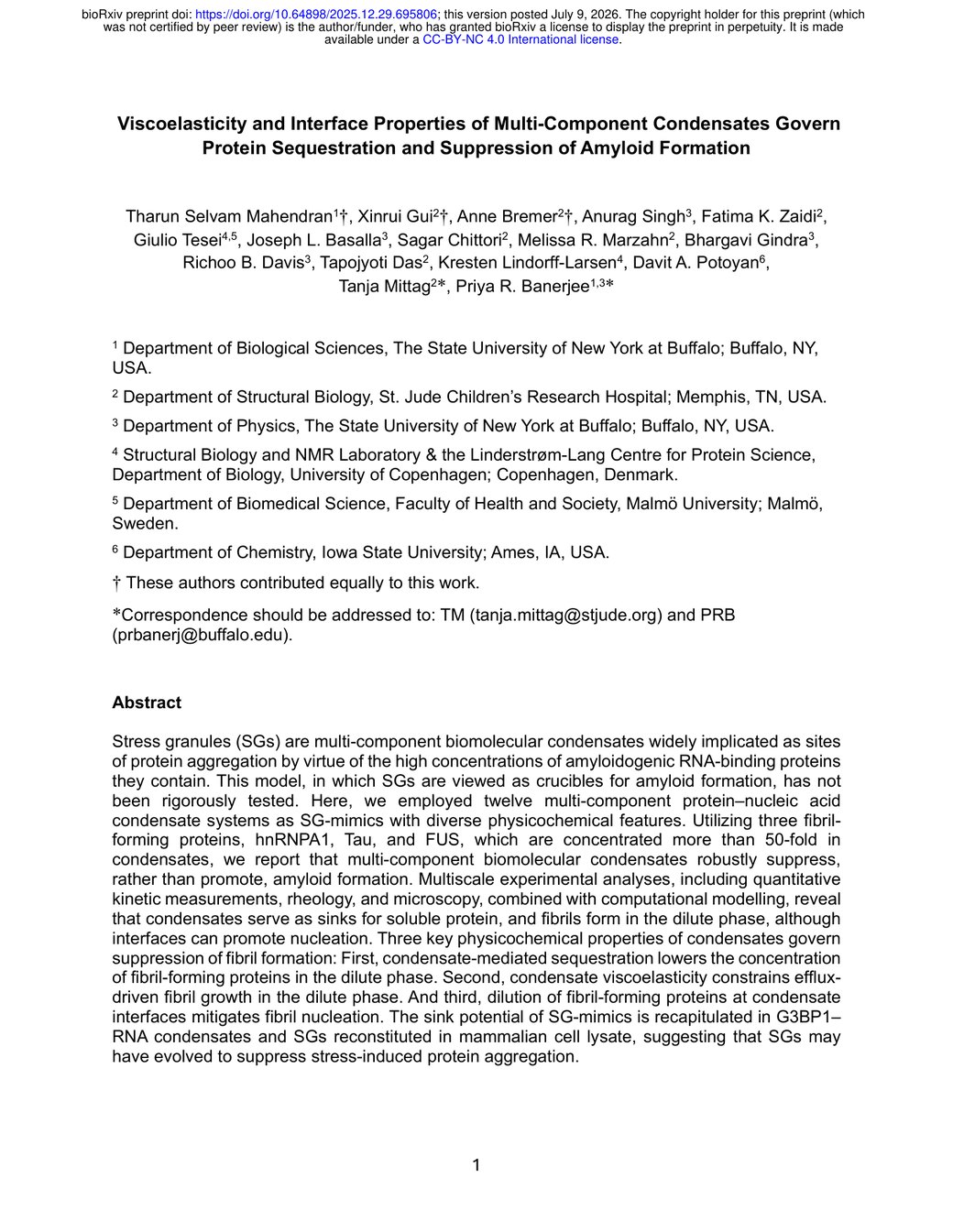
Viscoelasticity and Interface Properties of Multi-Component Condensates Govern Protein Sequestration and Suppression of Amyloid Formation
Mahendran, T.S., Bremer, A., Gui, X., …, Mittag, T., Banerjee, P.R.
We develop an optical tweezers and microfluidic platform to quantify client partitioning and efflux in multicomponent condensates. We find that condensate viscoelasticity and interfacial tension together govern how efficiently the condensate interior suppresses pathological self-assembly — revealing a physical basis for the protective role of stress granules in disease.
Frontiers in Aging Neuroscience · 2020
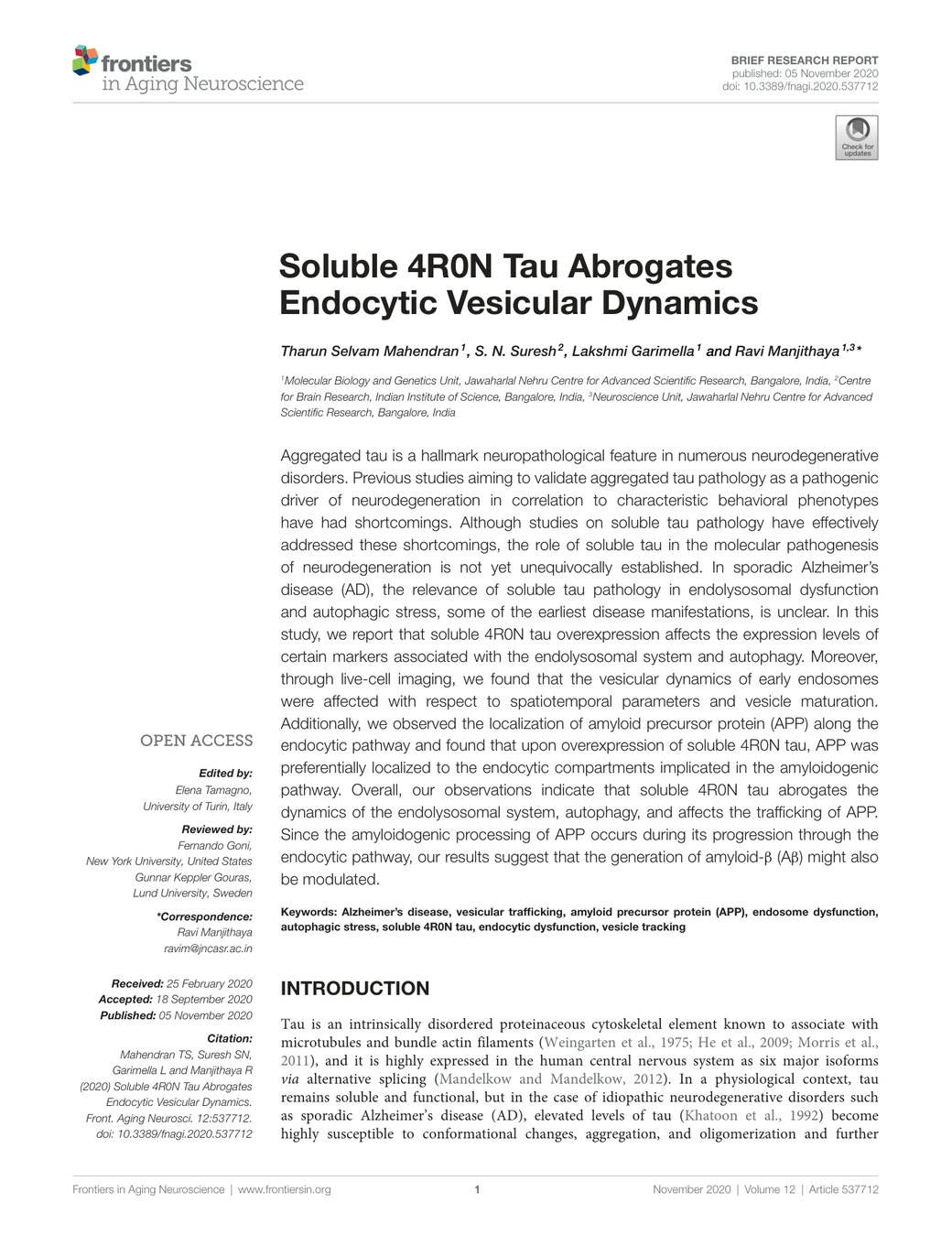
Soluble 4R0N Tau Abrogates Endocytic Vesicular Dynamics
Mahendran, T.S., Suresh, S.N., Garimella, L., Manjithaya, R.
We show that soluble tau — prior to forming tangles — disrupts endocytic vesicle trafficking in cells, implicating pre-aggregate tau species as an early driver of neuronal dysfunction in Alzheimer's disease. Live-cell imaging reveals that tau overexpression stalls vesicle dynamics in a 4R0N isoform-specific manner.
01

Research Focus

01
RNA Phase Transitions
Characterizing the thermodynamic and kinetic drivers of RNA condensation, including repeat-expanded RNAs that drive liquid-to-solid transitions linked to ALS and FTD.
02
Biomolecular Condensates
Using optical tweezers, microfluidics, and single-droplet rheology to quantify how condensate microenvironments regulate client recruitment, sequestration, and pathological self-assembly.
03
Decoupling Phase Separation & Fibrillization
Identifying small molecules and strategies that uncouple condensate formation from amyloid fibril nucleation, preserving the functional biochemistry of condensates.
04
Programmable Therapeutics
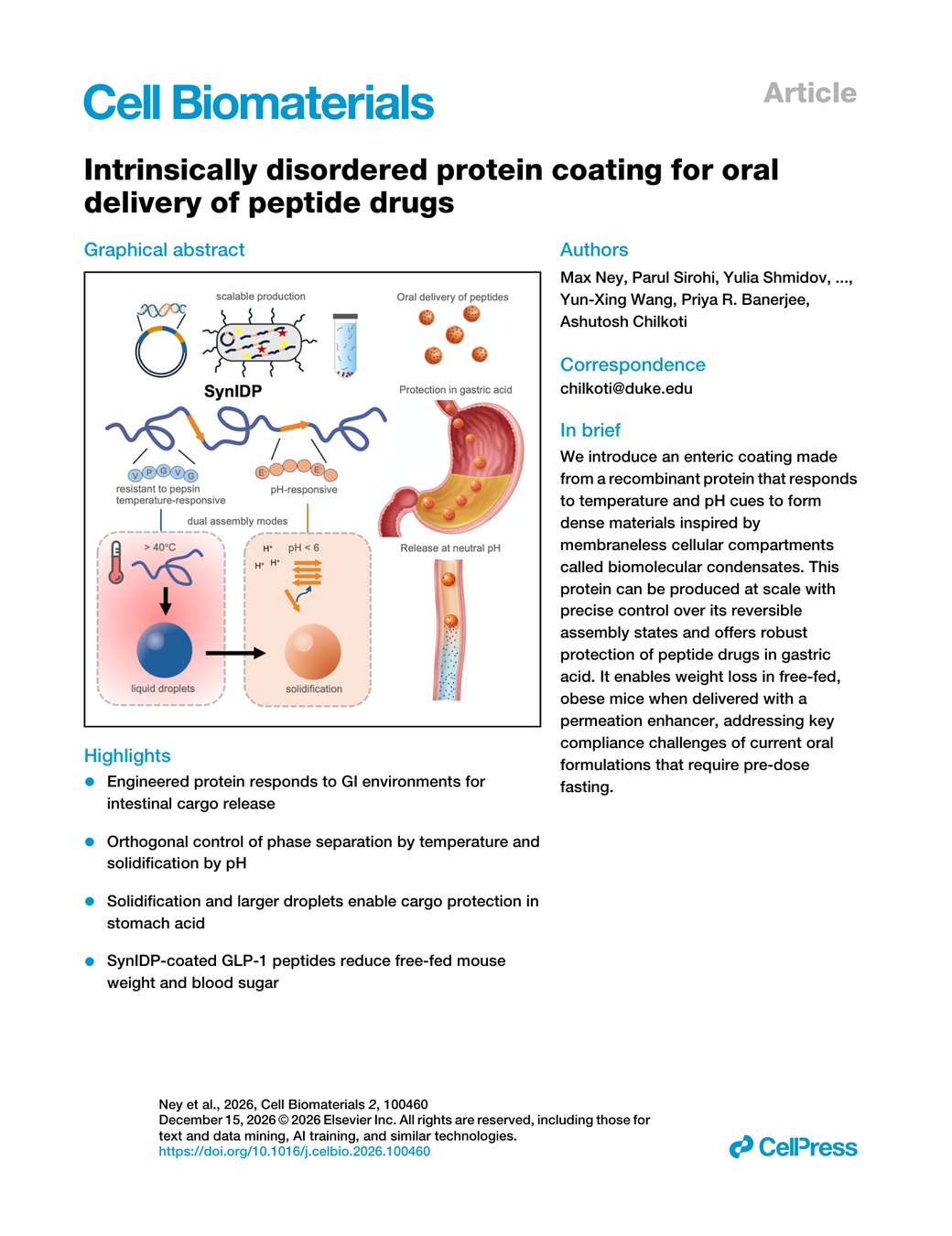
Engineering condensate behavior for next-generation RNA-based biologics, oral peptide delivery, and programmable biological materials.
02

Selected Publications

Nature Communications · 2026
Decoupling Phase Separation and Fibrillization Preserves Activity of Biomolecular Condensates
Mahendran, T.S., Singh, A., Srinivasan, S., …, Parekh, S.H., Banerjee, P.R.
Nature Communications
Nature Chemistry · 2025
Homotypic RNA Clustering Accompanies a Liquid-to-Solid Transition Inside the Core of Multi-Component Biomolecular Condensates
Mahendran, T.S., Wadsworth, G., Singh, A.S., Gupta, R., Banerjee, P.R.
Nature Chemistry · Media: EurekAlert, Phys.org
Molecular Cell · 2025
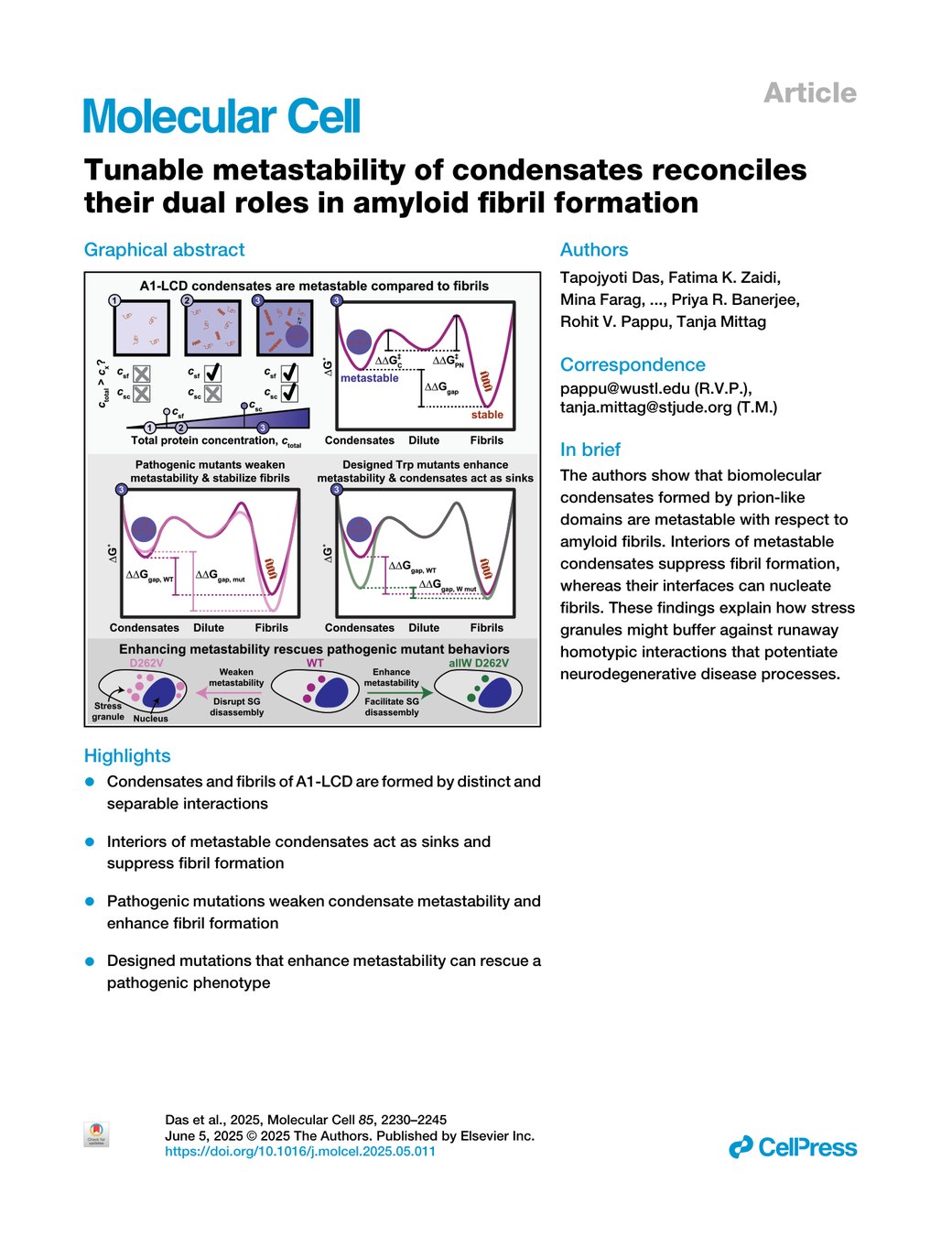
Tunable Metastability of Condensates Reconciles Their Dual Roles in Amyloid Fibril Formation
Das, T., Zaidi, F., Farag, M., Ruff, K.M., Mahendran, T.S., …, Banerjee, P.R., Pappu, R.V., Mittag, T.
Molecular Cell · Commentary in Cell Chemical Biology
Science Advances · 2025
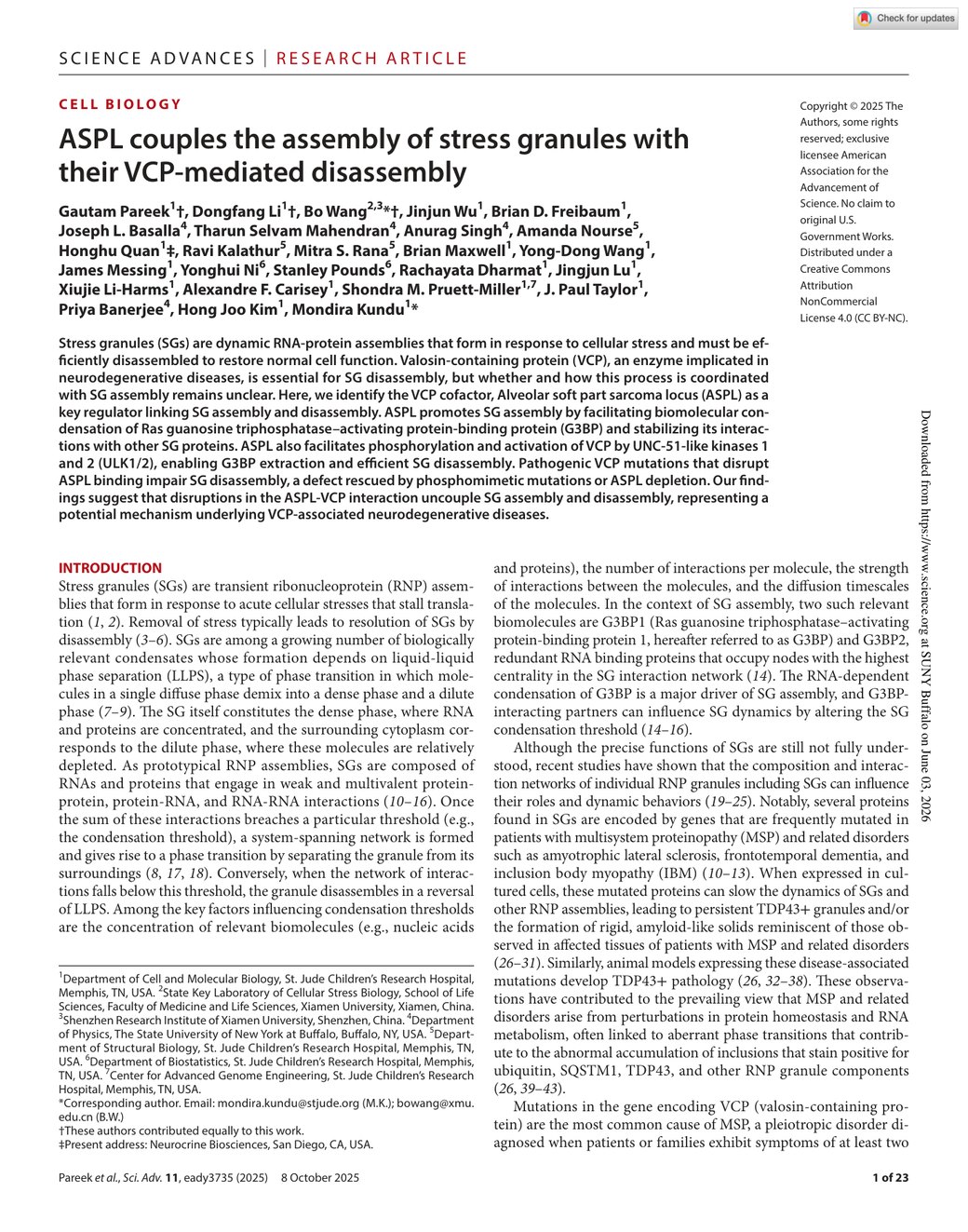
ASPL Couples the Assembly and Dissolution of Stress Granules: Implications for Disease
Pareek, G., Li, D., Wang, B., …, Mahendran, T.S., …, Banerjee, P.R., Kundu, M.
Science Advances
bioRxiv Preprint · 2025
Viscoelasticity and Interface Properties of Multi-Component Condensates Govern Protein Sequestration and Suppression of Amyloid Formation
Mahendran, T.S., Bremer, A., Gui, X., …, Mittag, T., Banerjee, P.R.
bioRxiv
Frontiers in Aging Neuroscience · 2020
Soluble 4R0N Tau Abrogates Endocytic Vesicular Dynamics
Mahendran, T.S., Suresh, S.N., Garimella, L., Manjithaya, R.
Frontiers in Aging Neuroscience
Chemosphere · 2021
Role of Cerium Oxide Nanoparticles in Improving Oxidative Stress and Developmental Delays in Drosophila melanogaster
Sarkar, A., Mahendran, T.S., …, Sahabudeen, S.
Chemosphere
Transcription · 2021
Long Noncoding RNAs: Role and Contribution in Pancreatic Cancer
Ramya Devi, K.T., Karthik, D., Mahendran, T.S., Jaganathan, M.K., Hemdev, S.P.
Transcription

Full list → Google Scholar  ·  PubMed  ·  bioRxiv

03

About Me

Education
Ph.D. in Biophysics
State University of New York at Buffalo · Dissertation: The Balancing Act of Biomolecular Condensates in Pathological Aggregation · Supervisor: Prof. Priya R. Banerjee
Jan 2021 – May 2026 (Expected)
B.Tech. in Biotechnology
SRM University, Tamil Nadu, India · First class with distinction
Aug 2015 – May 2019
Next Position
Incoming ODBI Innovator Fellow at Princeton University, with a long-term goal of building an independent research group.
Technical Expertise
Optical Tweezers + Microfluidics Flicker Spectroscopy Live-Cell Confocal Imaging Single-Droplet Rheology Particle-Tracking Nanorheology RNA Biochemistry FPLC Protein Purification Phase Diagram Mapping Fluorescence Lifetime Imaging In Vitro Condensation Assays Python / Image Analysis Adobe Illustrator Drosophila & Mouse Models
Selected Recognition
Best Presentation Award
Buffalo RNA Society, USA
2025
Student Research Achievement Award
Biophysical Society, USA
2025
Sigma Xi Companions in Zealous Research Award
Sigma Xi Society, USA
2025
Dissertation Fellowship
State University of New York at Buffalo
2025
Presidential Fellowship
State University of New York at Buffalo
2021
Tharun Selvam Mahendran presenting research
Presentations

Talks & Conferences

FASEB Phase Transitions in Cellular Signaling (Oral)Jan 2026
Buffalo RNA Society Seminar (Oral)Oct 2025
Biophysical Society Mini-Symposium (Invited Talk)Mar 2025
Biophysical Society Annual Meeting (Poster)Feb 2025
GRC on IDPs, Vaud, Switzerland (Poster)Jun 2024
APS March Meeting (Oral)Mar 2024
04

Get in Touch

I am open to exploring new ideas in the bioengineering and translational medicine space. Feel free to reach out.

Email
tharunse [at] buffalo.edu
Google Scholar
152+ Citations
LinkedIn
Tharun Selvam Mahendran
ResearchGate
Tharun Selvam Mahendran